
What we do
We teach storytelling as a leadership skill.
Developing this competency works at every level: a leader expanding their influence, a team sharing their expertise, or an organization aligned behind one narrative.
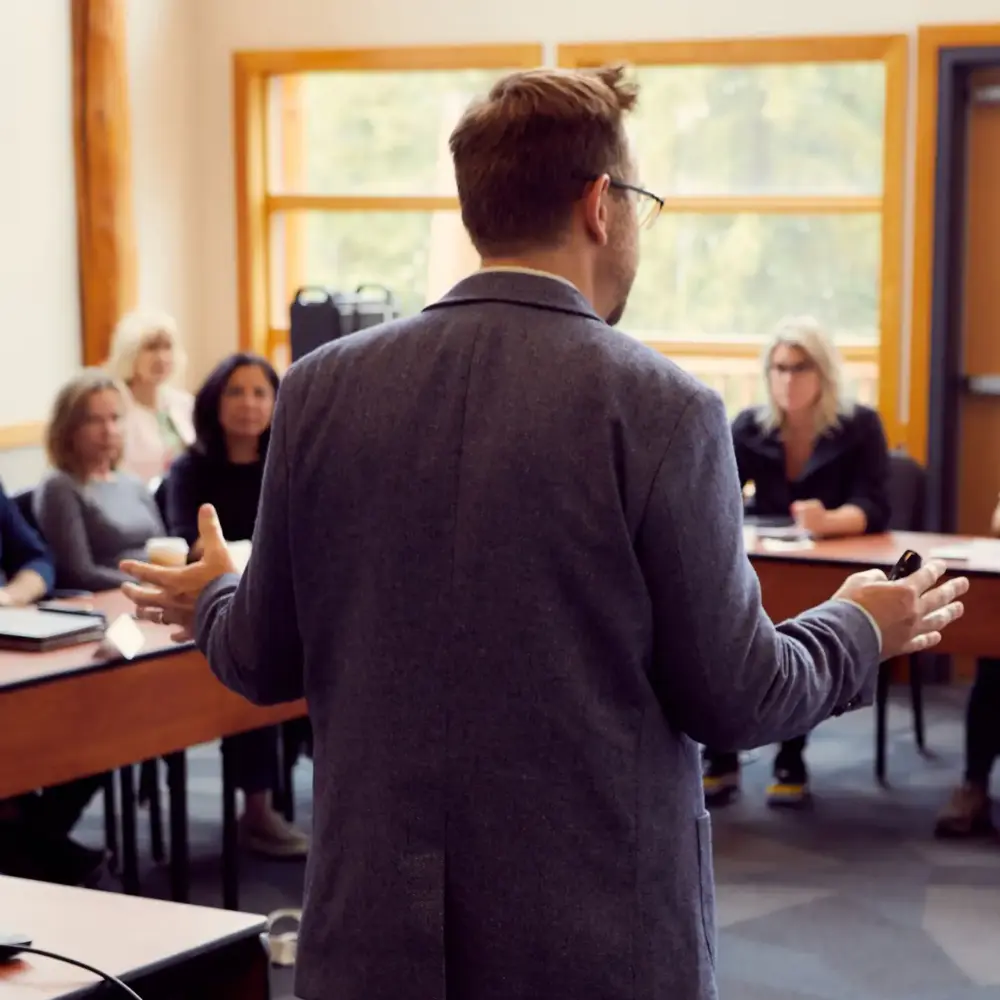
Why narrative matters
Before there’s a strategy, there’s a story.
Every organization is powered by narratives, whether visible or invisible. These stories decide which risks we take, what we invest in, who we promote, who we listen to, and what we believe is possible. Nobody wrote them down, but they’re shaping our work anyway.
When narratives are uncovered, questioned, and rewritten with intention, behaviour and outcomes can change with them. At the heart of our philosophy is that storytelling is a core leadership competency — one that can be learned.
The problems we solve

Communication is limiting influence
Despite high capability, communication is limiting how far your leaders’ influence reaches inside and outside the organization.

Expertise is lost in translation
The people who know your business best struggle to communicate their knowledge in a way that leadership can understand and act on.

Invisible narratives are running the show
No one wrote these stories, but they are shaping how people at every level think and behave.

Your story hasn’t left the C-suite
Your organization’s direction is clear only to the people who set it, and hasn’t effectively reached the people doing the work.
Our Approach
01
Sharing key frameworks
Developed across our work with thousands of leaders, these proven frameworks are yours to keep and use in your daily work.
How it works
- The Impact Model shapes how you build any message
- The Narrative Effect Framework surfaces invisible narratives, reframes them, and embeds the new story in everyday leadership
- The Narrative Playbook, a field guide to these communication structures and more, is provided with every engagement
02
Measuring skills
Communication is treated as a soft skill because it’s rarely measured. We give you a number rather than an impression.
How it works
- Participants rate their own proficiency across four categories before we start: clarity, narrative, presence, and impact
- They complete the same scorecard again after skill building
- Initial results shape direction, so we focus where individuals and teams need support
03
Finding your best ideas
Our faculty works closely with you to find the best ideas hiding inside what you already know, and to shape them.
How it works
- Collaborative conversations mine the depth of leaders’ knowledge and reveal how they think
- At the organizational level, conversations surface the beliefs already shaping decisions
- The resulting messages sound and feel authentic to the people delivering them
04
Creating room to be bold
Getting better at communication means practicing in real situations. We create the conditions that make that practice count, and stick.
How it works
- Group coaching makes peers an audience that can give insightful feedback
- Rehearsals are a low-stakes place to test an approach first
- A live capstone puts participants in front of a real audience with material that matters
How we help
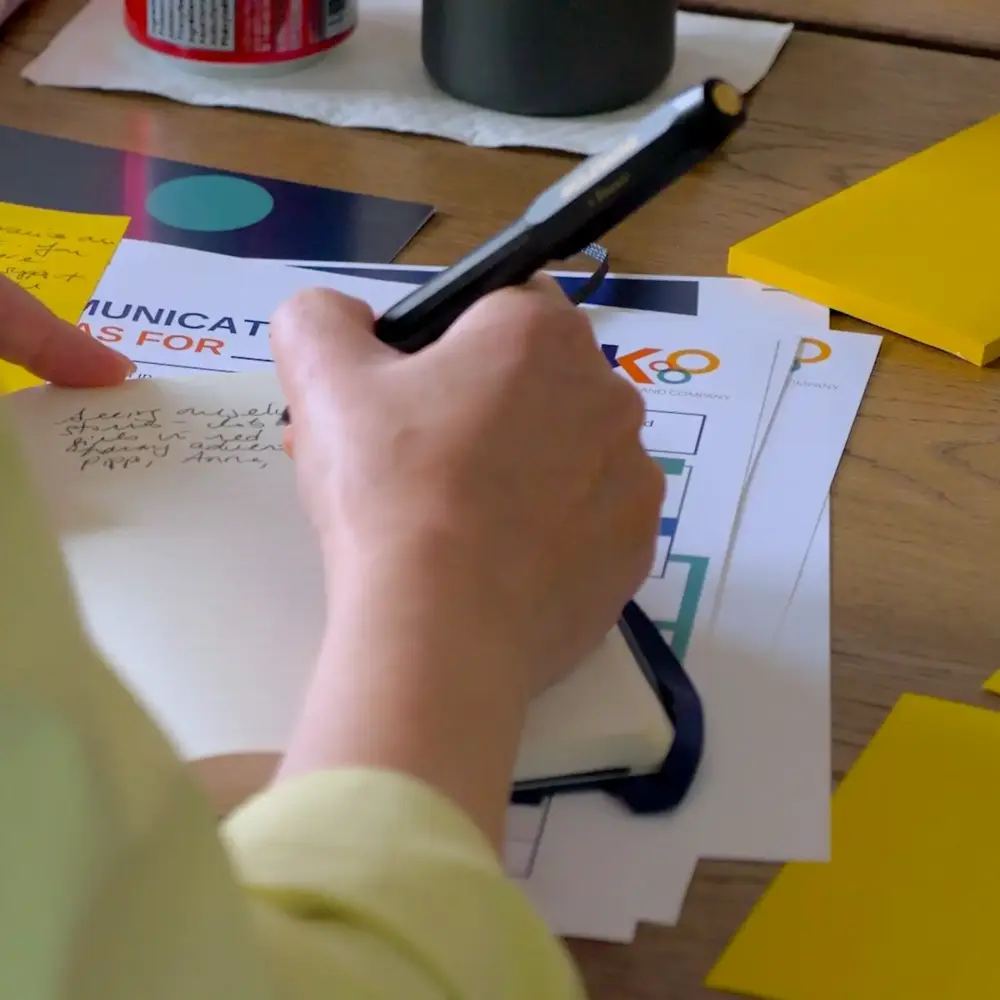
Communication Coaching
One leader, working on the high-stakes moments where their voice matters most
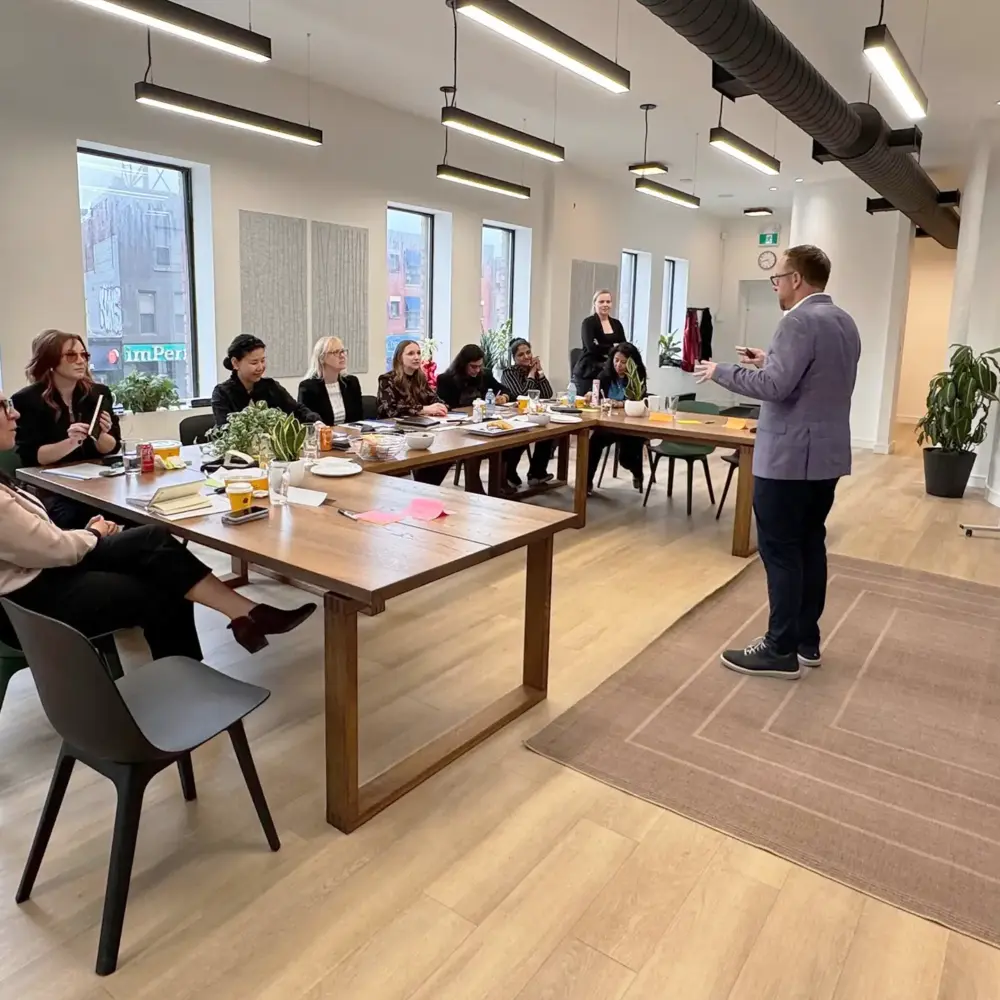
Learning Experiences
A team or cohort, building the same skills and the same language together.
Narrative Alignment
A whole organization or group, moving from an invisible story to an intentional one.

Keynotes
Your audience, learning from an author and coach who has worked with thousands of leaders to communicate their best ideas.
Case studies
What changed, and how it was done.
-
 Read case: Teaching the experts to be understood
Meridian Institute
Teaching the experts to be understood
A research group whose findings kept arriving in rooms that could not act on them.
-
Read case: One story for eleven product lines
Aldergrove Industrial
One story for eleven product lines
Every division could explain its own work and none of them could explain the company.
-
Read case: Rebuilding trust after a restructure
Northwind Health
Rebuilding trust after a restructure
A 400-person organisation had lost the thread between what leadership believed and what teams heard.